
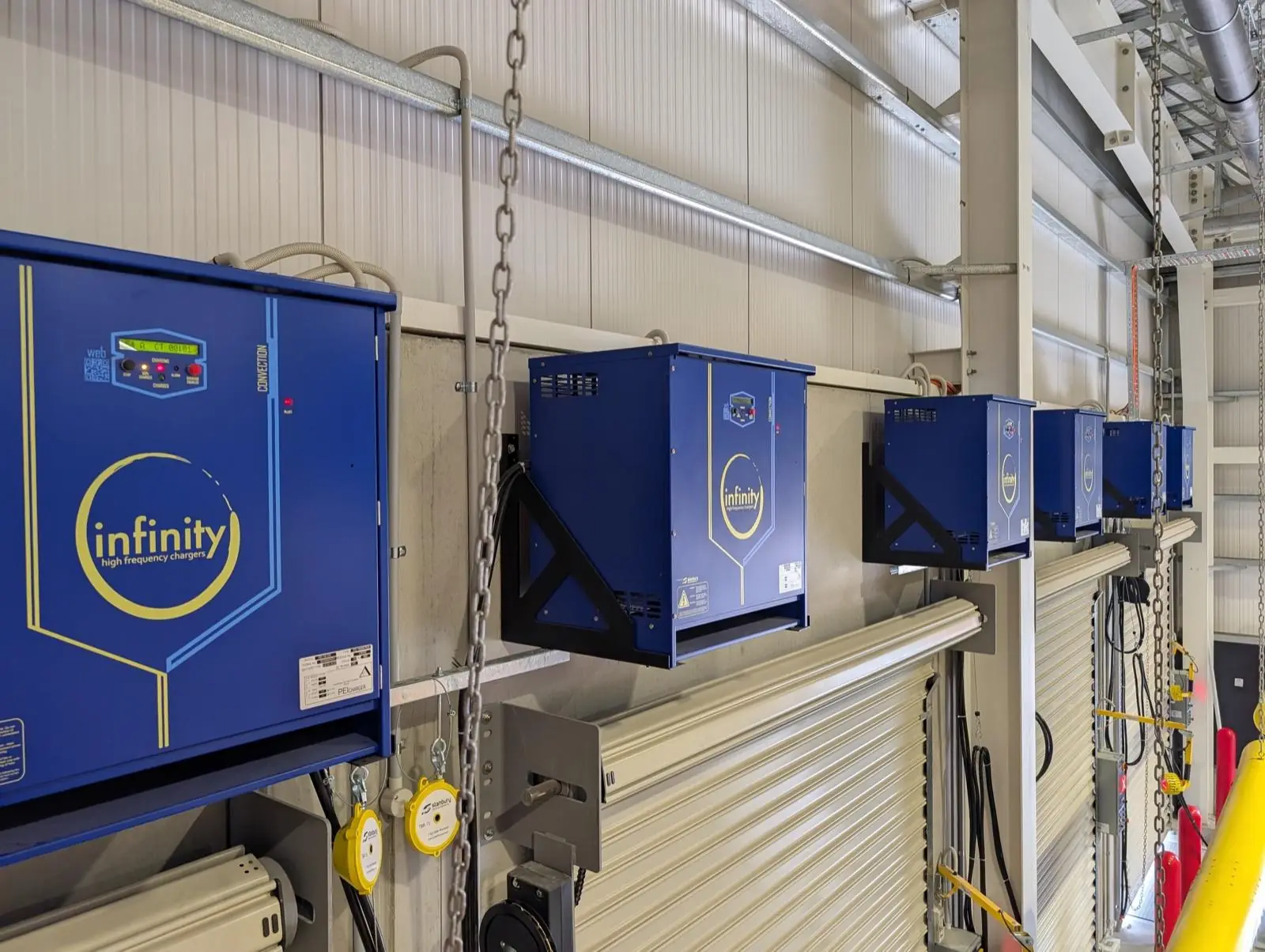
01 / CHARGING EXPLAINED
How to choose a forklift battery charger
Choose a forklift battery charger by checking battery voltage, chemistry, capacity, charging time, site power and connections before you request a quote.
Read the guideChoose a charger, plan a charging bay or get help with equipment already in use.
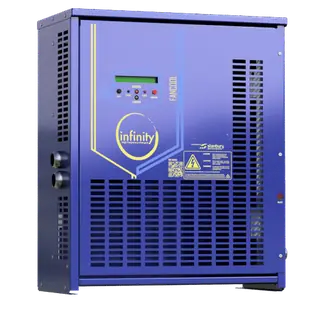
For a new charger, start with the battery nameplate and available site power. For an existing charger that needs attention, contact technical support or check service and warranty information.
Choose a forklift battery charger by checking battery voltage, chemistry, capacity, charging time, site power and connections before you request a quote.
Read the guideCompare conventional, opportunity and fast forklift charging. Plan around energy use, charging windows, battery-approved profiles and available site power.
Read the guideCompare flooded lead-acid, AGM, gel, TPPL and lithium charging requirements, with approved profiles, current limits, temperature and BMS communication.
Read the guide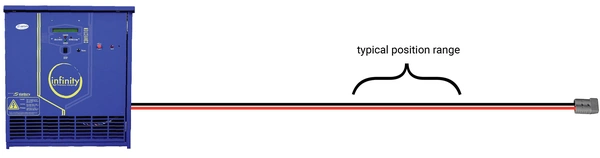
Plan a forklift charging bay with cable retractors, suitable connectors and mounting. Check parking positions, cable reach and combined electrical demand.
Read the guide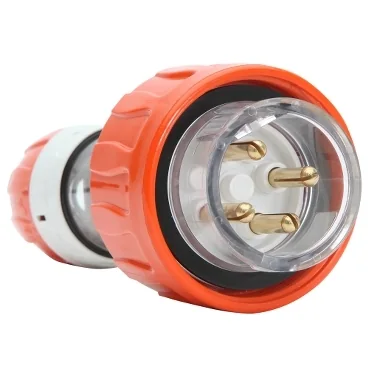
Which plugs fit which sockets? Compare Australian 56 Series 10 A and 20 A connections, phase, pin count and the supply your charger needs.
Read the guide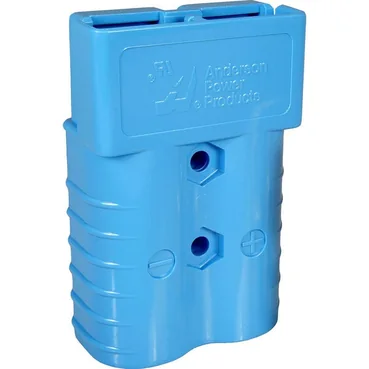
Match the connector family, size and mechanical key. Compare Anderson SB colour keying, SBE auxiliary connections and REMA DIN coding.
Read the guideCompare published charger outputs, then confirm the battery profile and installation.
Yes, for standard Australian 56 Series 10 A and 20 A round-pin connectors. A 10 A four-pin plug fits four-pin or five-pin 20 A sockets. A 10 A five-pin plug fits a five-pin 20 A socket. A 20 A plug does not fit a 10 A socket. See the complete fit table.
Yes, within the standard Australian 56 Series 10 A/20 A combinations shown in the table. Four pins provide three phases and earth. The fifth socket contact is neutral and is unused by the four-pin plug. A five-pin plug does not fit a four-pin socket. Compare all four combinations.
Yes. Stanbury configures AC plugs to customer requirements. The plug current rating can be higher than the charger’s required AC input current, but never lower. Compare AC input amps with plug amps, not the charger’s DC output amps. A larger plug does not increase the capacity of the supply circuit. Match the charger to site power.
Choose an appropriately smaller charger if the available charging window allows a longer charge. A multi-shift fleet needing a fast turnaround may need a supply infrastructure upgrade to support a larger charger. Compare the supply and charging-window options.
No. The series and size alone are not enough: standard SB housings must also match the keyed colour. For example, SB350 red mates with red and blue with blue; red does not mate with blue. Manufacturer-documented exceptions are listed separately. Check the colour-key rule.
Colour may indicate a site’s voltage convention, but it does not prove the actual battery voltage. Housing colours provide mechanical keying; companies may use their own voltage conventions. Read the battery voltage from its nameplate. Understand colour and voltage.
Yes. Compatible Stanbury multi-voltage chargers support different approved battery voltages with the correct setup and charging profiles, and provide wrong-voltage protection. That protection is limited to voltage; it does not cover wrong chemistry, charging profile or polarity. Read the multi-voltage guidance.