
High output three phase battery chargers
Multi-voltage. Higher output.
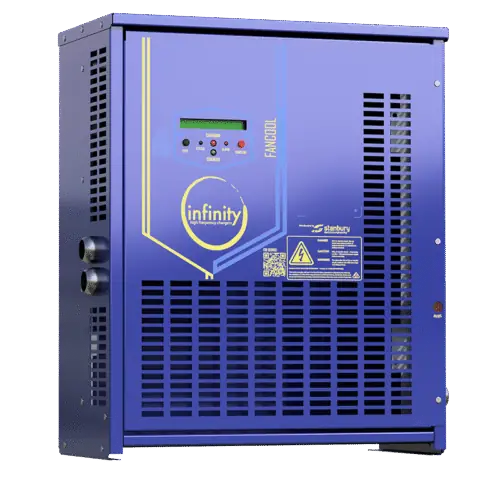
Range features and configuration
24–80 V multi-voltage charging with higher output for larger batteries and shorter charging windows. Configured with the right profiles for your batteries and operation.
Power & configuration
400 V three-phase input, 24–80 V multi-voltage operation and 8–18 kW modules. Profiles are set for the battery and charging routine. Opportunity or fast charging requires battery approval; larger configurations are reviewed separately.
Open archived February 2026 range datasheet (PDF, 0.2 MB)Battery, supply and connection
Match the profile
Chemistry, capacity, voltage and charge limits determine how your battery should be charged.
Check the supply
Confirm phase, voltage, available circuit capacity and total charging demand with your installer.
Make connection easy
Confirm connector type, polarity, cable length, mounting and any battery communication requirements.
A shorter charging window
For an 80 V battery with a confirmed 200 A planning target, compare models at 80 V rather than using their 48 V output. The catalogue-reference SFX80-17 lists 200 A at 80 V. Its current availability, battery approval and complete build need confirmation before ordering.
Charging bay checklist ↗ · Compare the published model outputs ↗
Two ranges. Matched to your fleet.
Choose from 48 V and 80 V ranges. For fleets that do not need 80 V charging, we generally select the 48 V range. Where wider voltage coverage is needed, we consider the 80 V range. We match the model, charging profiles and connections to the batteries you use.
Discuss your fleet’s charging needs ↗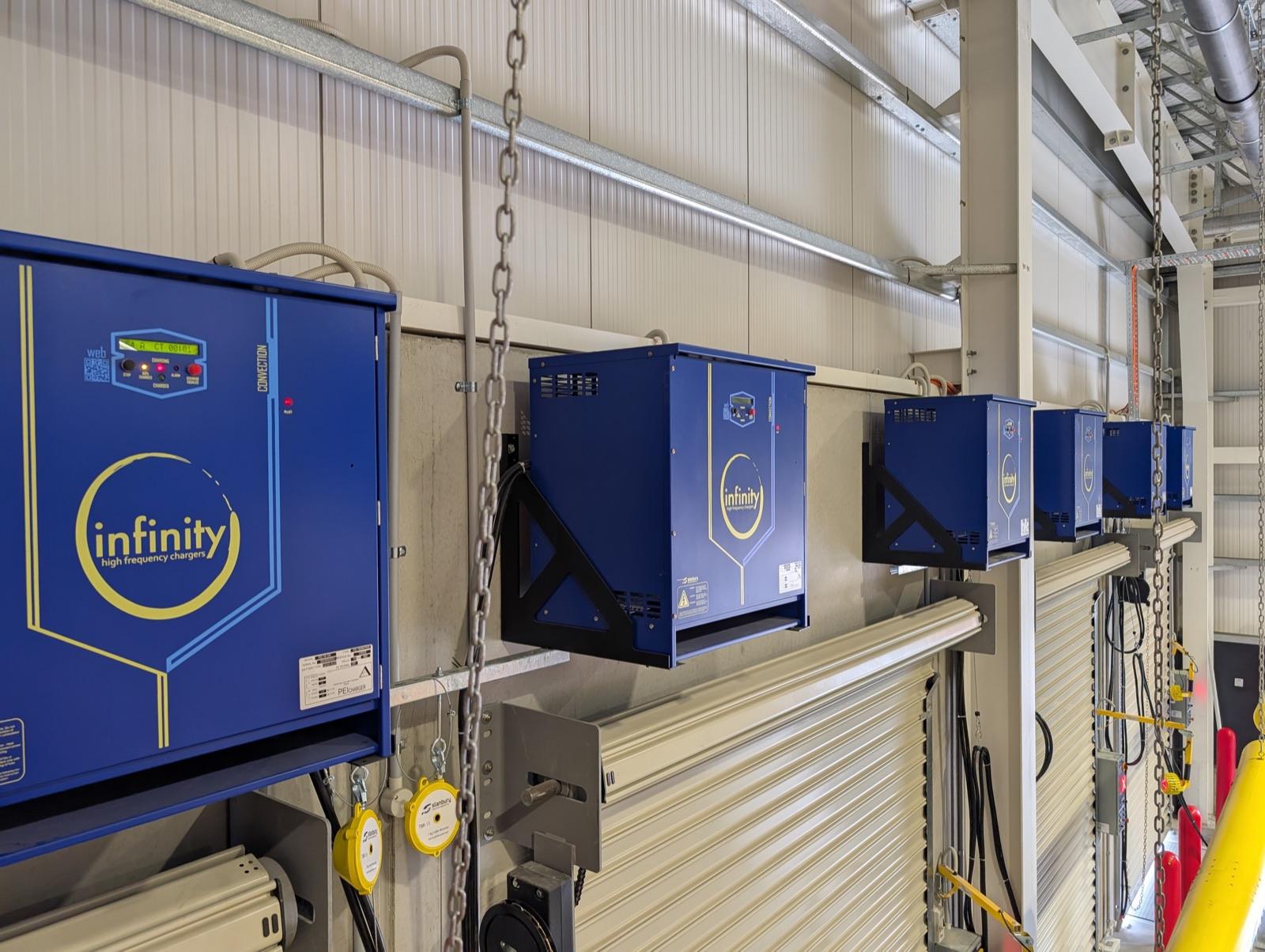
Plan the charging installation.
Mounting, cable reach and access matter as much as the charger rating. Share your layout so we can discuss a configuration for your operation.
Discuss your installation ↗Explore the specifications.
Model pages show dated public specifications or clearly marked archived catalogue ratings. Use the selector to check output at your battery voltage and review a charging estimate.
Compare battery-voltage output ratings on each model page. Published maximum current requires a matched battery profile and approved charge limits.