Australian charger specialists · Knoxfield, Victoria Call (03) 9764 8444Review site · Stripe sandbox
Ports & intermodal

Battery chargers for ports and terminal support equipment

Plan charging for port forklifts and terminal support equipment. Review outdoor placement, coastal exposure, cable protection and site demand.

Plan the charging around the work.

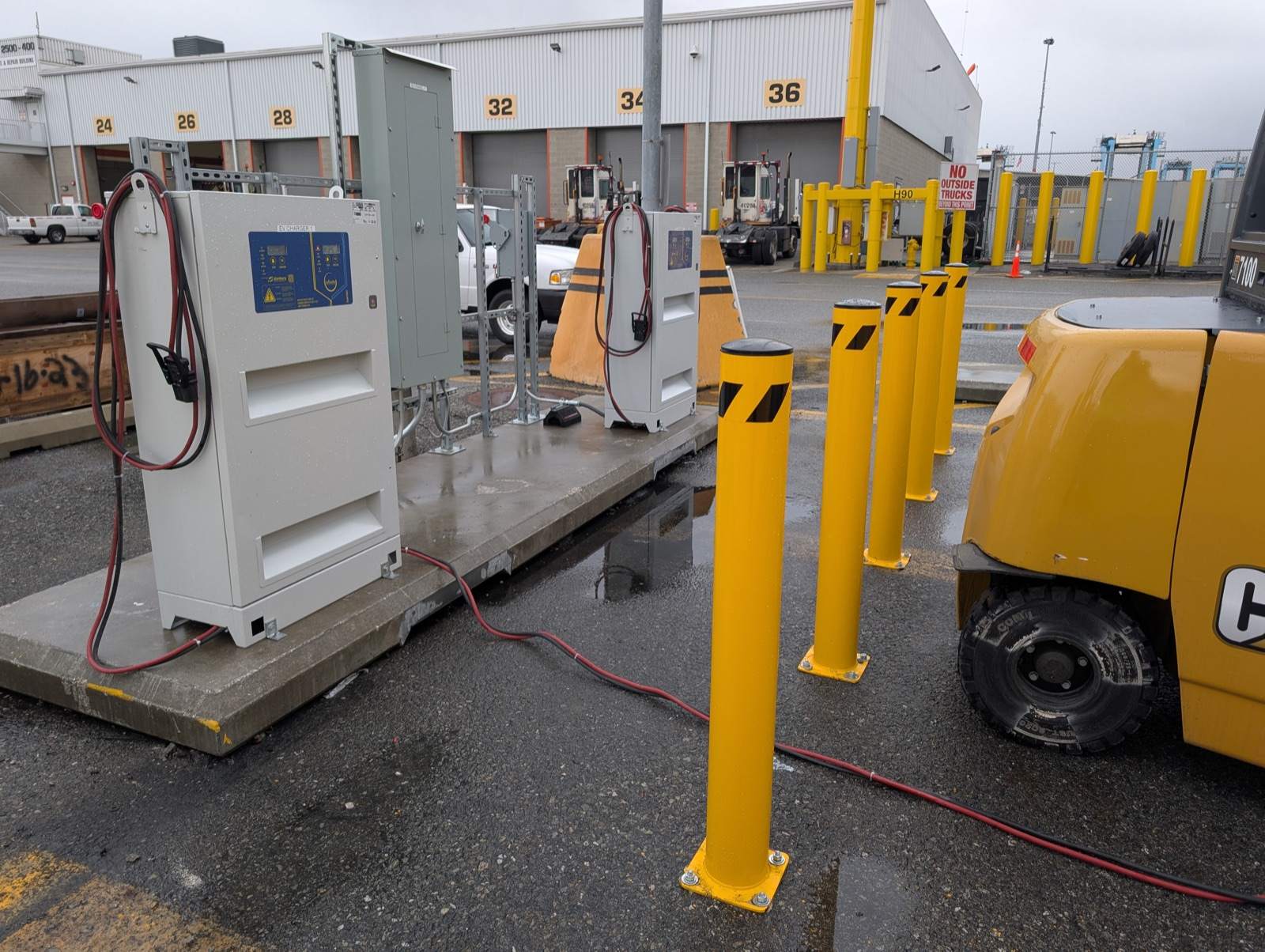
Select the battery interface and outdoor arrangement around equipment working between sheds, workshops and yards, including its actual exposure.

Stanbury outdoor cabinets beside protective bollards
01

Separate the fleet by charging requirement

Warehouse forklifts and support equipment may use different systems from terminal tractors or container handlers. Battery voltage, profile and interface establish where industrial charging fits. Specialist vehicles need their own charging-system assessment; vehicle category alone is not a match.

02

Plan for coastal exposure and maintenance

Salt, wind-driven moisture, dust and cleaning practices affect cabinet placement and connector storage. An outdoor rating covers particular protection tests; it does not establish resistance to every coastal condition. Check the chosen materials, protection and maintenance requirements for the location.

03

Protect cables in busy working areas

Check the cable path with equipment parked normally and keep stored connectors within easy reach. Select cable length, mounting and retractors together so leads stay clear of traffic. Longer cables need an electrical and mechanical review, not just more slack.

Include charging in the terminal power plan

Assess simultaneous battery charging alongside the site’s other loads. Multi-output cabinets can organise shared bays. Compatible RTPI installations can allocate charging power, with RTPI.edge and suitable metering where the allocation must respond to facility demand.

Before you specify

Charging questions.

Can forklifts and terminal tractors use the same charging equipment?

Only where their battery systems, interfaces and charging requirements match the specified equipment. Specialist terminal vehicles may need a different charging system from industrial forklifts and support equipment. Assess each battery and interface individually. Review the industrial selection checklist.

Does an outdoor rating cover salt exposure?

An outdoor rating covers defined protection tests, not every coastal condition. Confirm materials, connector storage, maintenance and placement for the actual salt, moisture and cleaning exposure. Review outdoor configurations.

How should charging expand with the fleet?

Compare new simultaneous loads and required ready times with available site power before adding outputs. Include other terminal loads and decide whether compatible power allocation, metering and RTPI.edge integration are needed. Explore site power management.