Australian charger specialists · Knoxfield, Victoria Call (03) 9764 8444Review site · Stripe sandbox
3PL & distribution

Battery charging for 3PL and distribution fleets

Plan charging for peak dispatch periods, mixed fleets and changing 3PL sites. Review multi-output charging, shared demand and fleet power management.

Plan the charging around the work.

Plan around the busy day: the trucks needed for dispatch, the batteries returning together and the power available at each site.

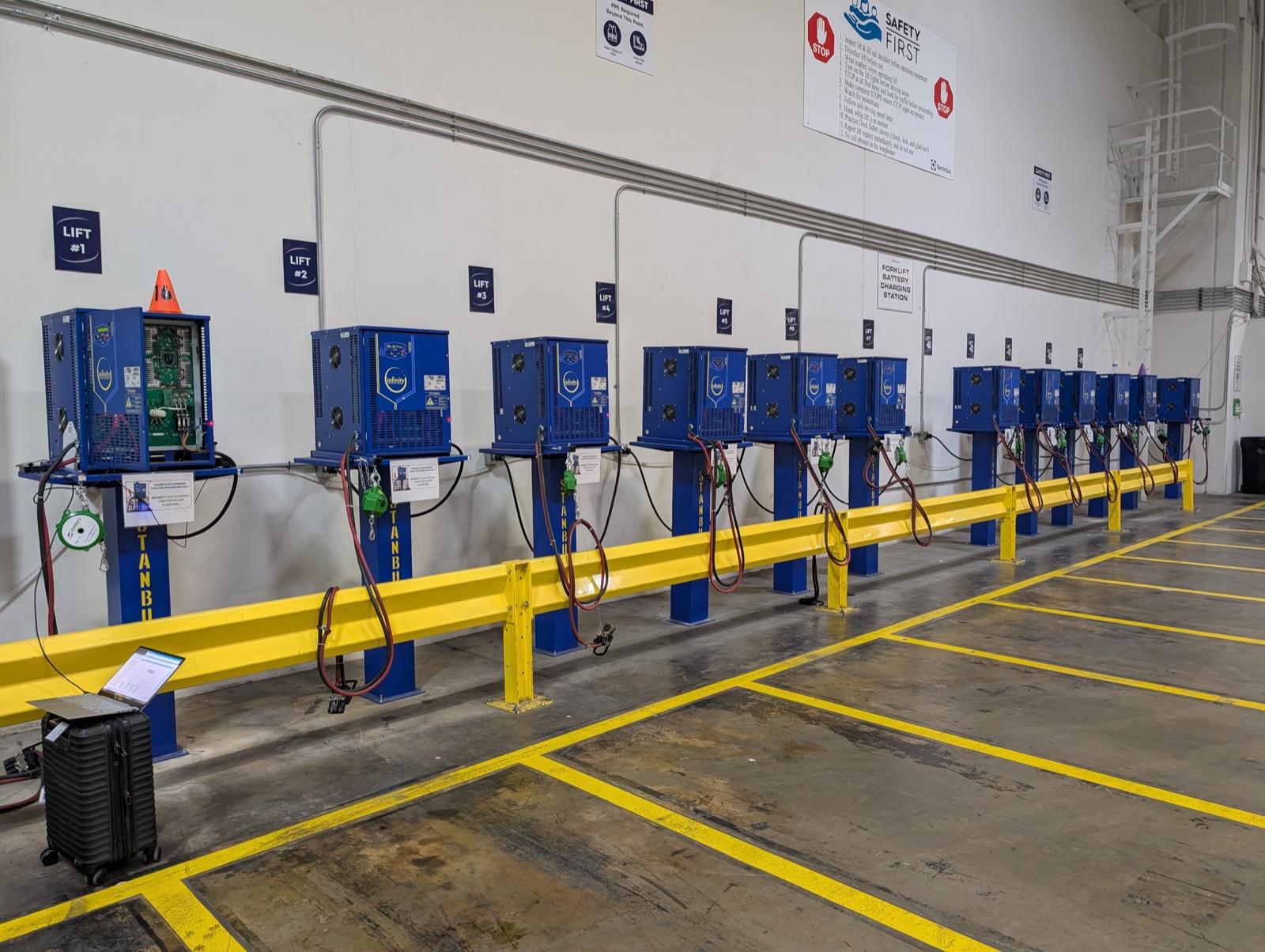
Row of Stanbury chargers on stands behind a yellow barrier
A row of charging units on stands behind a protective barrier.
01

Test the plan against peak demand

Count batteries that may charge together, including late returns and overlapping breaks. Decide which trucks must be ready first. Fleet size alone does not establish the number of charging points or the output needed during the busiest dispatch period.

02

Add ports with a power plan

Multi-output cabinets bring several battery connections around one AC input. Each output is specified for its battery, but the combined installation still needs enough power. More plugs do not create more energy; compare simultaneous output and ready-by times before adding ports.

03

Keep fleet changes manageable

Maintain a battery-and-charger register across sites: voltage, chemistry, capacity, profile and connector. Check hired or reallocated equipment against it. Supported configured profiles can allow different voltages to share a charger; a reused specification still needs to match the new site’s supply and layout.

When site power becomes the constraint

RTPI provides charging visibility and supported power-allocation controls. Responding to the rest of the building’s demand requires suitable metering and RTPI.edge integration. Agree priorities and check whether available energy can meet the fleet’s ready-by times before deciding that an electrical upgrade can be avoided.

Before you specify

Charging questions.

Does four-profile charging mean four batteries can charge together?

No. Loaded profiles define how a compatible charger charges different batteries. Physical outputs determine how many batteries can connect at once. A multi-output installation needs the right profile and connection at each output, with total AC demand assessed. Review multi-output configurations.

Can the same specification be used across distribution sites?

Standardise the battery register and connection requirements, then check each site’s supply, concurrent use and layout. Similar trucks can have different batteries, and the same charger arrangement can place a different demand on another site. Check battery and supply requirements.

Can power management avoid an electrical upgrade?

It may help where charging can be scheduled or power allocated within the available capacity. The site must still supply enough energy by the required ready times. Responding to facility demand needs compatible equipment, suitable metering and RTPI.edge integration; the electrical assessment remains necessary. Explore RTPI power management.