Australian charger specialists · Knoxfield, Victoria Call (03) 9764 8444Review site · Stripe sandbox
Warehousing

Forklift battery chargers for warehouses

Plan forklift charging around shifts, battery types and warehouse space. Review mixed-fleet profiles, cable management and charger outputs.

Plan the charging around the work.

We match charging output, profiles and bay layout to the time your reach trucks, pallet trucks and forklifts are actually parked.

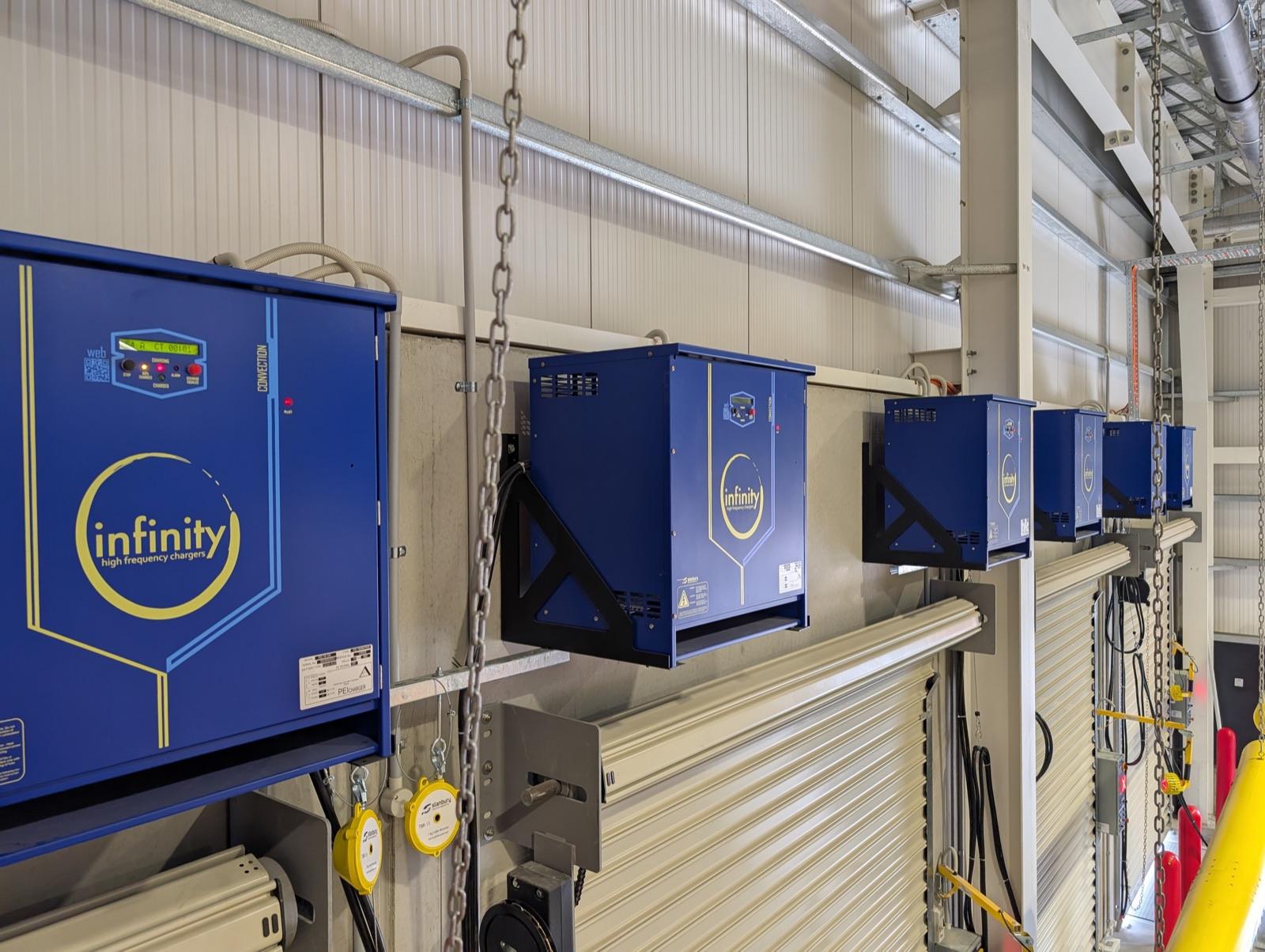
Wall-mounted Stanbury Infinity chargers with cable retractors
Wall-mounted charging units with cable retractors in an indoor bay.
01

Start with the hardest shift to cover

Overnight charging and short breaks need different plans. Count the time each truck can stay connected, including the battery’s required finish and rest periods. Higher output helps only when the battery accepts the current and the charging window allows the complete routine.

02

Make a shared charger useful

Compatible chargers can hold up to four configured profiles and select the voltage profile automatically. The supported voltage range and current depend on the model. Batteries at the same voltage may need different settings or identification; we configure profiles, connections and lead lengths for the actual fleet.

03

Put charging where it is easy to use

Measure cable reach with the truck parked normally. Wall mounting, suitable stands and overhead retractors can keep equipment and leads clear of traffic. Leave room to connect, store the connector, cool the charger and access it for service.

Choose the output at your battery voltage

Single-phase models can suit smaller equipment where the supply and battery match. Compact three-phase models offer another option for mixed fleets. Higher output is useful when the approved battery current and parking time justify it; the largest kW number alone is not the selection.

Before you specify

Charging questions.

Can trucks top up during breaks?

Yes, where the battery and configured profile are approved for opportunity charging. Allow for the actual break length, permitted current and required finish or rest periods. A larger charger alone does not make a top-up routine suitable. Compare charging methods.

Can one charger serve 24 V and 48 V batteries?

A compatible multi-voltage model can serve those voltages when both appear in its output table and the correct profiles are loaded. Supported chargers can hold up to four profiles and select the configured voltage profile automatically. Different chemistries at the same voltage still need a reliable identification or communication method. Review battery profiles.

Can chargers be wall-mounted to save floor space?

Suitable wall brackets or stands can keep the charger clear of vehicles. Check cabinet weight, fixing suitability, ventilation, cable reach and access to the controls and service points before choosing the position. Plan the charging bay.